Identifying Clothes & Carpet Moths - Webbing Clothes Moth / Case-Bearing Clothes Moth
Identifying Clothes and Carpet Moths
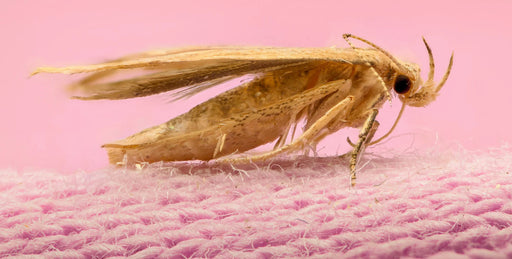
The most common clothes moths are the Webbing Clothes Moth, easily identified with a golden colour and around half an inch in length, and the Case-Bearing Moth, which can be identified about ½ inch long and their forewings are mottled brown with one large and a few smaller indistinct black spots.
These moth species can attack clothes and other home textiles, and are commonly known as clothes moths or carpet moths depending on where their larvae are found causing damage.
Identifying Clothes & Carpet Moths - Webbing Clothes Moth / Case-Bearing Clothes Moth
It is important to note that Clothes Moths and Carpet Moths are not separate species - the species of moths that attack clothing and carpets are the same - they are commonly called ‘clothes’ or ‘carpet’ moths depending on where they are found and what fabrics they target.
It's also important to note that these moths are looking for animal-based fibres to lay their eggs - think wool, merino, cashmere, silk, feather, fur.
The reason that it is animal-based fibres only is that the larvae of clothes moths and carpet moths feed on keratin - a protein found in animal fibres, and also in dust. A large proportion of dust is made up of human skin cells and hair shed day to day in homes. There are two main moth species that cause most of the damage to clothing and home textiles. They are the Webbing Clothes Moth and the Case-Bearing Moth.
There are two main moth species that cause most of the damage to clothing and home textiles. They are the Webbing Clothes Moth and the Case-Bearing Moth.
Webbing Clothes Moth (Common Clothes Moth)
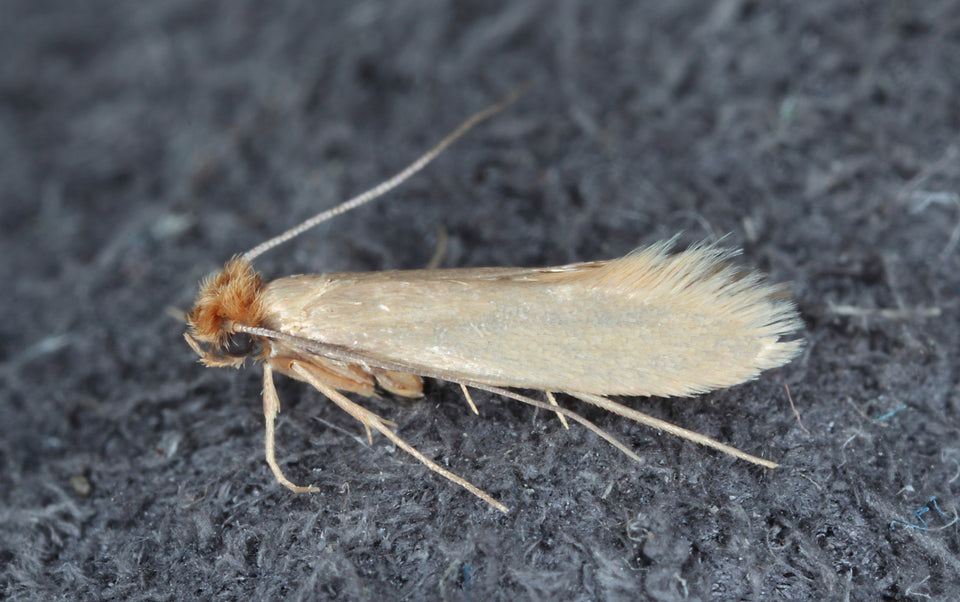
The Webbing Clothes Moth (Tineola bisselliella) is also known as the Common Clothes Moth or simply Clothing Moth.
Easily identifiable with a golden colour and around half an inch in length. Webbing Clothes Moths will most commonly be seen flying just after pupation and a sudden occurrence will often happen with warmer weather in Spring. The transition from winter to spring triggers pupation and the move to the next lifecycle stage. Flying clothes moths are usually looking to mate.
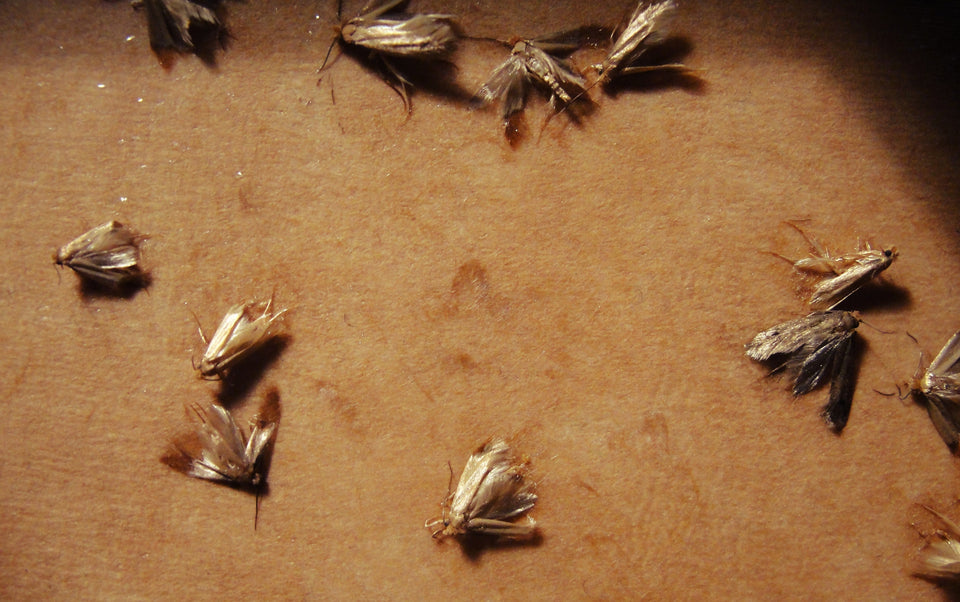
As the adult webbing clothes moths mature, they will be less active and prefer dark, undisturbed areas and that is exactly the environment where they will lay their eggs - to be undisturbed and on the animal fibre based food source that will be needed by the larvae to survive after they hatch.
Less used corners of closets or drawers, fitted carpets under furniture that is rarely moved and wool rugs are particular favourite places for egg laying. Rugs are also a target because it is easy for the larvae to crawl underneath and do their damage from below. Webbing Clothes Moth larvae will also crawl under baseboards in search of darkened areas where debris has gathered and which consequently contains food.
The eggs are tiny, most being under 1 mm long and barely visible. A female will lay several hundred during her lifetime. Egg placement is carefully chosen in locations where they will have the best chance for survival.
The eggs are attached with a glue-like substance and can be quite difficult to remove. After the egg hatches, the clothes moth larva will immediately look for food. Clothes moth larvae can obtain their required food within two months to progress to the next stage of their life-cycle, but if conditions are unfavourable they will feed intermittently for a long time. Whether it takes two months or two years, each larva will eventually spin a cocoon in which it will pupate and change into an adult Webbing Clothes Moth. Clothes moth larvae stay in these cocoons for between one and two months and then emerge as adults ready to mate and lay eggs.
Contrary to what most people believe, adult moths do not eat or cause any damage to clothing or fabric. It is the clothes moth larvae which are solely responsible for damage to clothing and carpets, and which spend their entire time eating and foraging for food.
Case-Bearing Moth
The Case-bearing Clothes Moth (Tinea pellionella) is widespread within North America. The adults are typically encountered during summer and early autumn, but Case-bearing Clothes Moths that live in human dwellings may be seen all year-round.
The adults of this small moth are about ½ inch long and their forewings are mottled brown with one large and a few smaller indistinct black spots. The hindwings are plain pale brown-grey. Both the forewings and the hindwings are edged by a hairy fringe.
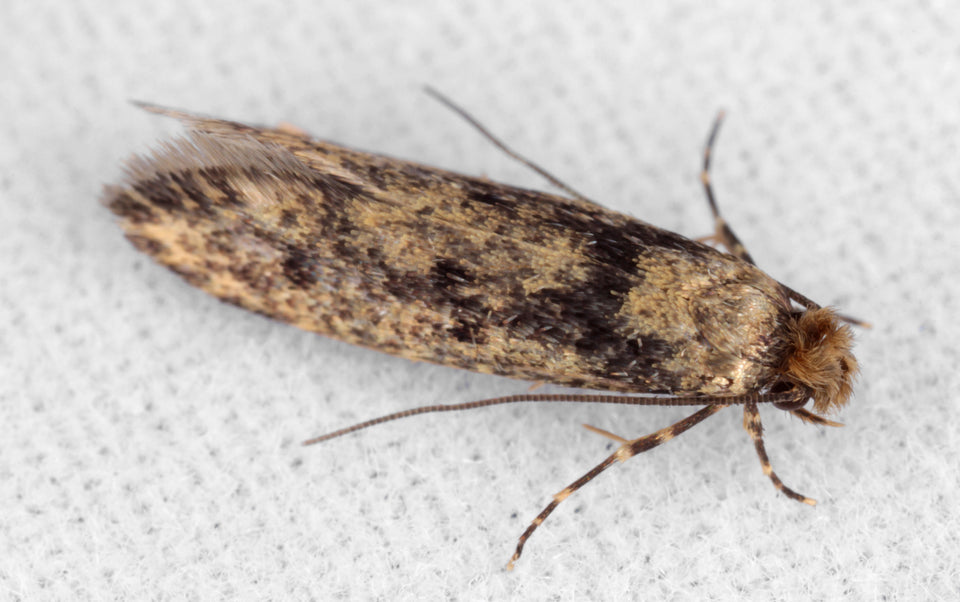
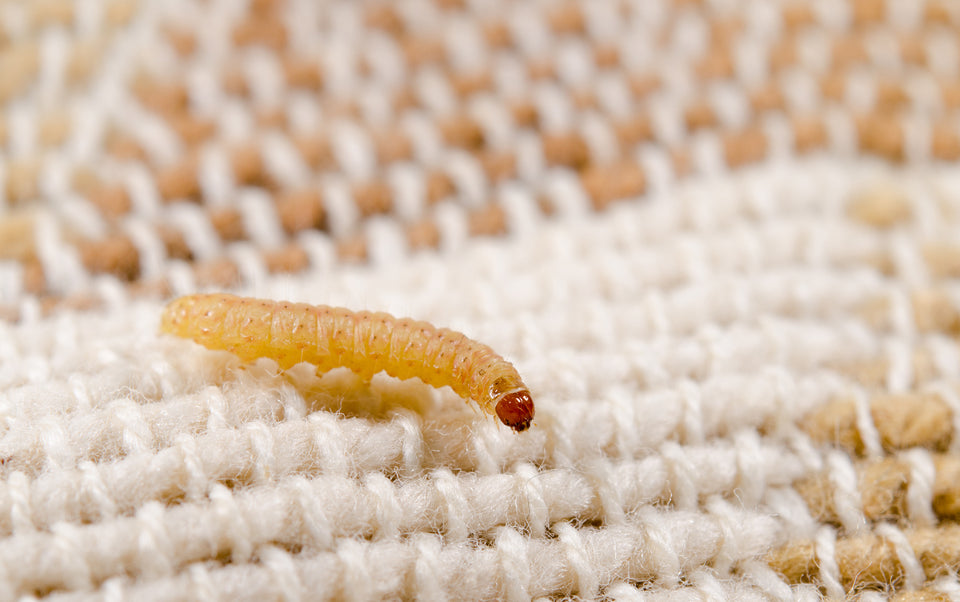
The case-bearing moth larvae eat keratin, similarly to webbing clothes moths, and found in animal based fabrics - clothing and home textiles including carpets and rugs. The Case-Bearing Clothes Moth builds itself a portable case out of debris such as fibres and hairs, in which they can hide.
The Life Cycle of a Carpet Moth & Clothes Moth
The carpet moth has a very similar life cycle to a clothes moth.
The adults do not live long and the mated adult female lays hundreds of eggs in her short life time. The eggs will be laid in the quieter, darker and undisturbed areas of carpets and rugs and lay dormant for approximately 4 to 10 days before hatching. The larvae can live for up to 2 years which accounts for continued damage as they eat through the winter months, but in warmer periods they will pupate within 2 months of hatching, resulting in a number of cycles through the Spring to Autumn months. The pupation stage will last up to 2 weeks before the adults emerge. The adults are relatively harmless and only live 2-3 months, but the issue and risk to property is clearly the risk of further egg laying and the infestation getting out of land, hence the need to deal with both adult and larvae stages of the carpet moth lifecycle in treatment routines.
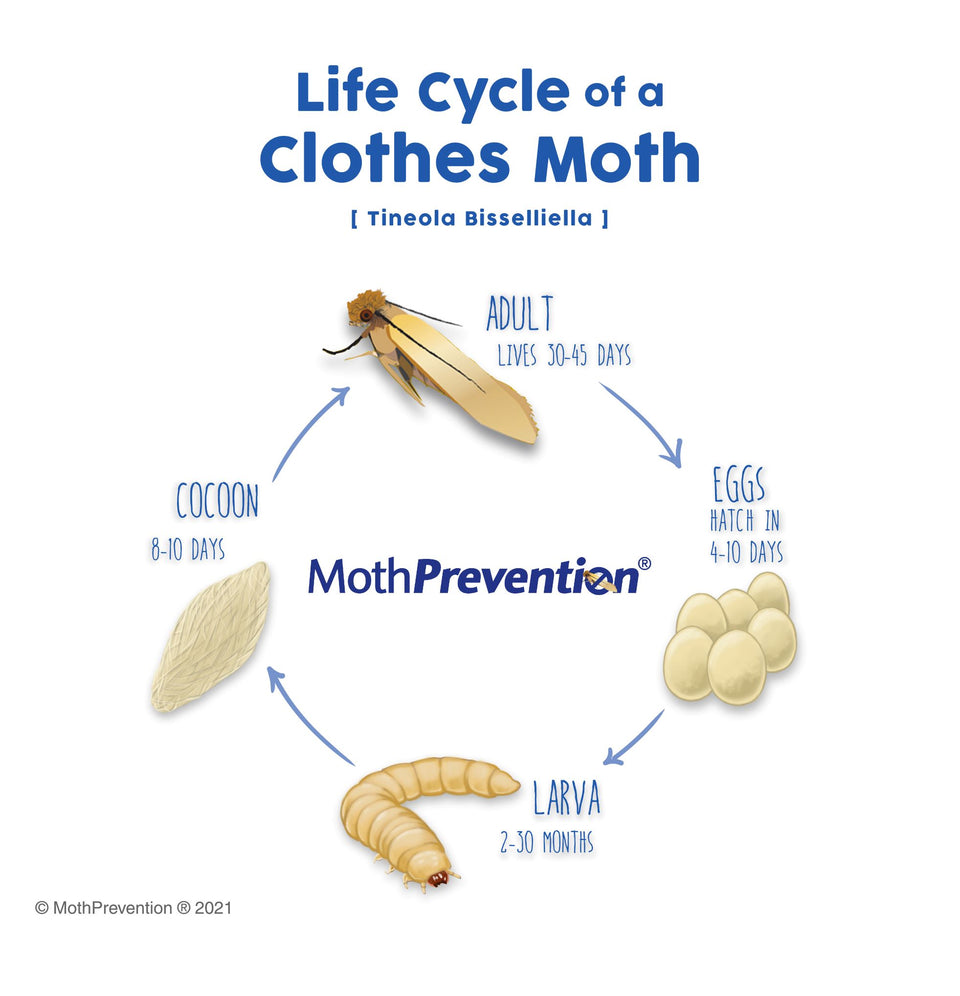
For more detail on the clothes moth life cycle, see our page describing the full life cycle of the clothes moth.
Clothes Moth Traps
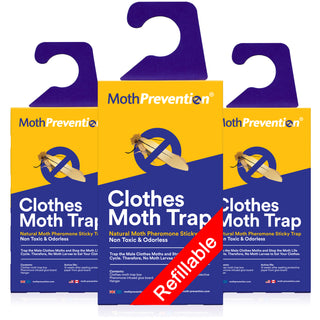
MothPrevention clothes moth traps contain specific pheromones that will attract the male Webbing Clothes Moth and male Case-Bearing Moths - the pheromones differ from those needed to catch pantry moths (Indian Meal Moths being the most common). This is why it is so important to identify the species that you believe to be a problem.
Other Species and Types of House Moths
Even though they are by far the most common, you may not recognise your moths as the ones above; it may be that you have White-Shouldered Moths or Brown House Moths, both of which can damage clothing.
Identifying Clothes Moths & Carpet Moths With Images
Use our photo guide below to identify clothes moths and carpet moths. Click on the images for more information about each species.


Look for 1/2-inch long buff-coloured moths with narrow wings that have hairs along the edges. These are adult clothes moths. The adults do not eat fabric, but their presence means that eggs will be laid that will produce fabric-eating larvae.
Check for the clothes moth larvae if adult moths are present. The larvae are creamy-white coloured caterpillars, which can be as much as a 1/2 inch in length. Identify webbing clothes moth larvae by their feeding tunnels of silk, or webbing patches left behind on the fabric as they move around.
Adult webbing clothes moths have a wingspread of about 1/2-inch and that of the male is somewhat less... The body is about 1/4-inch long with wings folded and golden-yellow with a satiny sheen (see picture below). A tuft of reddish golden hairs on the head is upright and reddish-gold. Eggs are oval, ivory, and about 1/24-inch long. Larvae are a shiny, creamy white with a brown head, up to 1/2-inch long. The larvae spin long threads and construct tunnels of silk.
Clothes moth larvae feed on wool, feathers, fur, hair, leather, lint, dust, paper, and occasionally cotton, linen, silk, and synthetic fibres. They are especially damaging to fabric stained with beverages, oil from hair, and sweat. Most damage is done to articles left undisturbed for a long time, such as old wool blankets, wool upholstery, feathered hats, antique dolls and toys, weavings, wall hangings, piano felts, old furs, and especially wool carpets under heavy furniture and clothing in storage.
Damaged fabrics have holes eaten through them by small, white larvae and often have silken cases, lines of silken threads, and fecal pellets over the surface of the materials. Moths are destructive during the larvae stage. Adult "millers" or moths are entirely harmless.
Clothes and Carpet Moth Control
We have prepared easy to follow, step by step guides to guide you through dealing with Clothes and Carpet Moths:
How Do I Stop Moths Eating My Clothes?
How Do I Get Rid Of Carpet Moths & Carpet Moth Larvae?
About MothPrevention
MothPrevention® speak to customers every day about their clothes moth issues - clothes moths are a species that are ever increasing and that can cause significant damage to clothes, carpets and other home textiles.
To date, we’ve helped over 250,000 customers deal with their moth problems. We have developed professional grade solutions including proprietary pheromones and trap design engineered to the highest production standards.