How to Track Down the Source of a Clothes Moth Infestation

If you’ve noticed small moths fluttering around your wardrobe or discovered mysterious holes in your favourite wool jumper or cashmere scarf, you may be facing a Clothes Moth infestation. These tiny insects can cause surprising damage for their size, with their larvae feeding quietly on natural fibres and leaving behind ruined garments and no end of frustration.
The key to solving a Clothes Moth problem is more than simply treating the symptoms. You must find the source, the place where moths are breeding, laying eggs, and feeding, to break the life cycle completely. This guide will help you understand where to look, what to check, and how to use Clothes Moth Traps and Refills to monitor and protect your wardrobe long term.
Understanding the Enemy: The Clothes Moth Life Cycle
To track down the source of an infestation, it helps to understand the life cycle of the Clothes Moth. Adult Clothes Moths don’t eat fabric, in fact they don’t have mouths. Their only purpose is to reproduce. Females lay eggs on or near suitable materials, usually in dark, undisturbed spaces where larvae will have plenty of food.

When the eggs hatch, tiny larvae emerge, and these are the true culprits. Clothes Moth Larvae feed on animal based fibres that contain keratin, a natural protein found in wool, cashmere, silk, fur, and feathers. Over several weeks, they chew through fabric, creating holes and frayed patches. Once fully grown, the larvae spin cocoons and eventually emerge as adult moths, ready to start the cycle again. If you’ve seen adult moths flying around, there are almost certainly larvae feeding somewhere nearby. The goal is to find and remove those hidden sources.
Step 1: Confirm the Type of Moth
Before you start searching, make sure you’re dealing with Clothes Moths and not Pantry Moths. Pantry Moths are attracted to dry foods like flour and cereals, while Clothes Moths are drawn to natural fabrics. Clothes Moths are small, about half an inch long, with golden or beige wings and a slow, fluttering flight pattern. They avoid light and are usually found in dark areas such as drawers, and wardrobes. If you notice holes in wool, silk, or cashmere garments, or in rugs and upholstery, you’re almost certainly dealing with Clothes Moths.
Step 2: Start with the Most Vulnerable Areas

Clothes Moths prefer dark, still environments where they won’t be disturbed. Begin your search in places that meet those conditions. Check the back corners of wardrobes, the undersides of drawers or furniture, folded clothes stored for a long time, garments hanging close together or packed tightly, the edges and underside of rugs or carpets made from natural fibres, wool blankets, scarves, and hats in storage boxes, and upholstered furniture especially near seams. Be thorough. Larvae often hide along seams, cuffs, collars, and inside pockets where movement and light are limited.
Step 3: Look for Signs of Activity
When investigating potential hotspots, look closely for the following signs:
- Small white eggs about the size of a grain of sand
- Silky webbing or tunnels left by feeding larvae
- Frass that resembles fine sand or tiny grains
- Shed larval skins
- Silk covered cocoons
- Adult moths hiding in dark corners or folds of clothing
If you find any of these signs, the infestation source is close by.
Step 4: Deep Clean the Affected Area
Once you’ve found evidence of moth activity, clean thoroughly to remove eggs, larvae, and debris. Vacuum wardrobes, drawers, floorboards, and carpet edges, using the crevice attachment to reach seams and corners. Empty the vacuum bag immediately after cleaning to prevent re-infestation. Wash or dry clean all affected clothing according to care labels, as warm washing or dry cleaning kills larvae and eggs. Wipe surfaces with a mild cleaning solution and let everything dry completely before returning items. If you discover an infestation in rugs or upholstery, vacuum carefully and consider professional cleaning if damage is significant.

Step 5: Use Clothes Moth Traps to Locate and Monitor Activity
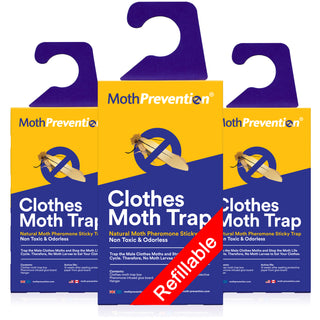
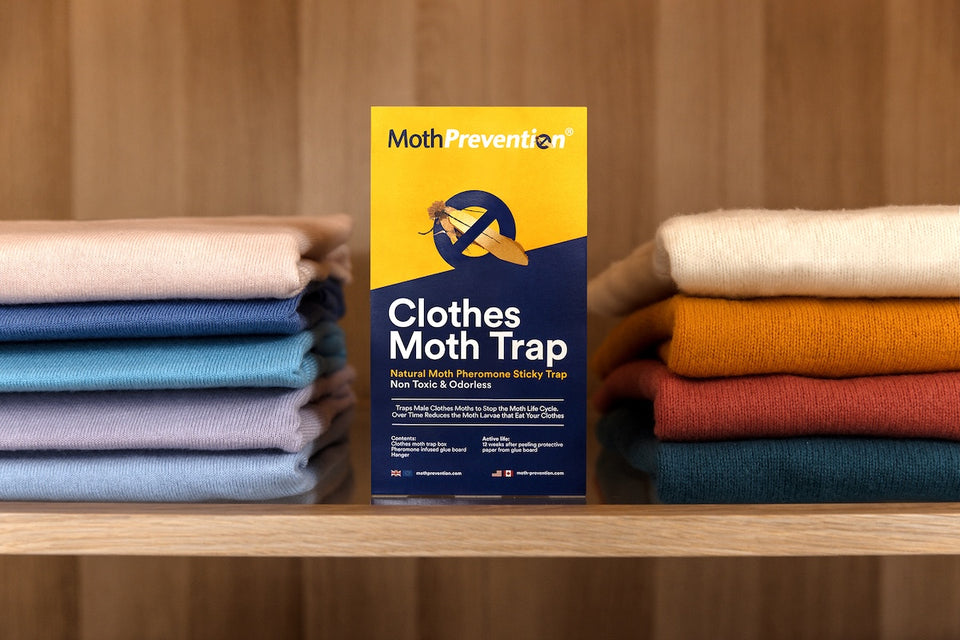
Once your wardrobe and storage spaces are clean, Clothes Moth Traps are invaluable for tracking down remaining activity. These pheromone traps attract and capture adult male moths, breaking the breeding cycle and helping you pinpoint where moths are most active. Place traps inside closets or wardrobes, near drawers or fabric storage boxes, under or behind furniture in rooms with wool rugs or carpets, and away from windows or direct light. Check traps weekly to see where activity is highest. This helps you identify hidden sources you may have missed. Replace Clothes Moth Traps every 12 weeks to ensure they remain effective. For ongoing protection, use Moth Trap Refills to keep them working continuously throughout the year. Refills are a simple, cost effective way to maintain peace of mind, ensuring your traps always perform at their best.
Step 6: Prevent Future Infestations
Once you’ve located and removed the source, prevention is key. Moths thrive in undisturbed environments, so regular activity and maintenance make your home less appealing to them. Clean wardrobes, drawers, and floor edges every few weeks. Move and air garments periodically to disturb any eggs or larvae. Store off season clothing in breathable cotton garment bags rather than plastic. Inspect garments before storing them and ensure everything is clean, since sweat and food residues attract larvae. Keep Clothes Moth Traps and Refills in place year round for continuous monitoring.
Step 7: Check Hidden and Overlooked Areas
If you still find that moths are present after cleaning, the source might be somewhere unexpected. Check old wool blankets in storage chests, decorative items made from natural fibers such as dried flower arrangements or felt ornaments, and stored winter accessories like gloves, hats, and scarves. Pet bedding made from wool or feathers can also be a perfect host for moths, and it is worth checking out loft or attic spaces that contain old fabrics or upholstery too. Clothes Moths can survive in forgotten corners for months, so tracking these hidden sources is essential.
Step 8: Stay Consistent
Dealing with Clothes Moths takes persistence, but once you’ve identified the source, routine cleaning and monitoring will keep them away. Clothes Moth Traps make this easier by helping you spot new activity early and catching the adult male moths, helping to break the breeding cycle. By replacing your Traps every 12 weeks and keeping Refills on hand, you maintain an invisible barrier against re-infestation that protects your wardrobe throughout the year.
Clothes Moths are persistent, but finding the source of an infestation is the most effective way to stop ongoing damage to wool, cashmere, silk, and other natural fibres. By inspecting common hiding places, cleaning regularly, storing garments correctly, and using Clothes Moth Traps with Refills for continuous monitoring, you can break the breeding cycle and prevent new larvae from developing. With consistent habits and the right tools in place, you’ll protect your wardrobe from future Clothes Moth activity and keep your clothing safe throughout the year.
About MothPrevention
MothPrevention® speak to customers every day about their clothes moth issues - clothes moths are a species that are ever increasing and that can cause significant damage to clothes, carpets and other home textiles.
To date, we’ve helped over 250,000 customers deal with their moth problems. We have developed professional grade solutions including proprietary pheromones and trap design engineered to the highest production standards.