Don't Let Pantry Moths Haunt Your Halloween: Protecting Autumn Baking and Trick-or-Treat Supplies

Autumn in the United Kingdom brings crisp mornings, warm woollen knitwear, comforting seasonal recipes, and bowls ready for trick-or-treaters. Whether you are stocking up on multi-packs of chocolate bars for Halloween night or gathering speciality flours, dried fruit, and spices for seasonal baking, kitchen larders and cupboards are typically fuller than usual at this time of year. Unfortunately, humans are not the only ones attracted to these rich carbohydrate stores.
Pantry moths, particularly the Indian Meal Moth (Plodia interpunctella), find autumn kitchens especially hospitable. As outside temperatures drop, central heating provides an ideal, stable environment for these persistent insects to breed and multiply indoors. Discovering silk webbing inside a brand-new bag of wholemeal flour or noticing tiny caterpillars inside a box of Halloween sweets can quickly ruin your seasonal celebrations.
Regaining control of your kitchen does not require toxic insecticide sprays. By understanding how these pests behave, recognising the early warning signs, and applying a methodical hygiene and monitoring plan, you can protect your autumn provisions and keep your kitchen completely moth-free.
Meeting the Culprit: The Indian Meal Moth
Before implementing a defence strategy, it is essential to correctly identify the insect causing the problem. In the UK, the most prevalent dry-food pest found in domestic kitchens and larders is the Indian Meal Moth.
Adult Indian Meal Moths are small, with a wingspan of approximately 14 to 18 millimetres and a resting body length of roughly 8 to 10 millimetres. Their wings feature a distinct two-toned colour pattern: the section closest to the head is a pale greyish-tan, whereas the remaining two-thirds display a darker, reddish-brown or coppery lustre.
A common misunderstanding is that flying adult moths are directly consuming your food supplies. In reality, adult moths possess non-functional mouthparts; they do not eat at all. Their sole biological drive is to locate a mate and deposit eggs.
The tangible destruction is caused entirely by pantry moth larvae. A single mated female moth can lay up to 400 microscopic eggs directly on or adjacent to accessible foodstuffs. Within a matter of days, these hatch into active, voracious cream-coloured caterpillars. The larvae feed continuously on dried goods, contaminating flour, grains, and treats with dense silk webbing, dark fecal frass pellets, and cast-off larval skins.

The Halloween Treat Trap: Packaging Vulnerabilities and Larval Infiltration
Many householders assume that factory-wrapped sweets and confectionery are impervious to pantry insects. Shoppers frequently express genuine shock upon discovering active caterpillars inside completely unopened packets of Halloween chocolates, fun-size bars, or dry baking ingredients brought home recently from local supermarkets.
This leads to the mistaken belief that the packaging was breached in transit or that the seal was defective. In truth, pantry moth larvae possess remarkable physical adaptations that enable them to infiltrate sealed food packages with surprising ease:
- Chewing Through Thin Packaging Barriers: Larvae are equipped with strong, chewing mandibles. While they cannot penetrate sturdy glass jars or rigid structural plastics, they easily chew their way through thin cellophane, waxed wrappers, standard paper bags, and light polythene film. Newly hatched larvae, which measure less than one millimetre in size, can also crawl directly through microscopic pinhole breather vents and unsealed folded seams found on flour packets and cardboard boxes.
- Attraction to Nut-Based Chocolates and Cocoa Solids: Larvae are strongly attracted to nuts, and cocoa derivatives. Fun-size bars containing hazelnuts, peanuts, almonds, crisped rice, or nougat are primary targets for breeding females and their hungry offspring.
- Cardboard Multi-Packs and Display Sleeves: Confectionery multipacks frequently arrive in lightweight cardboard boxes or perforated card sleeves. Corrugated cardboard provides accessible, dark crevices, folds, and fluted corners where female moths readily deposit eggs before the boxes are even opened.
- Foil Wrappers with Folded Seams: Decorative seasonal foil on novelty chocolates is folded together rather than hermetically heat-sealed. In their earliest stages of development larvae easily squeeze beneath foil seams to access the chocolate inside, leaving tiny trails of webbing behind.
Purchasing confectionery weeks ahead of 31 October and storing it in a dark larder, under-stair cupboard, or utility room can unintentionally provide a quiet, sheltered breeding ground for hungry larvae.

Health Realities and Biological Behaviour in the Kitchen
Discovering an active infestation inevitably raises urgent concerns regarding household hygiene and family health. One of the most distressing moments for any home baker or parent is realising that contaminated flour was used in a bake, or that someone has inadvertently eaten a sweet from a compromised packet.
From a medical and entomological perspective, the consequences are reassuringly benign. Indian Meal Moths do not carry infectious diseases, venom, or systemic biological toxins harmful to humans or household pets. Inadvertent ingestion of pantry moth larvae, microscopic eggs, or silk webbing does not cause food poisoning or parasitic infections. While spoiled food must obviously be thrown away because of contamination, unpleasant taste, and hygiene reasons, accidental consumption is harmless and does not warrant emergency medical intervention.
Another common behaviour that causes substantial worry among UK homeowners is noticing small, cream-coloured grubs crawling away from the pantry, often ascending kitchen walls or gathering along ceiling cornices, picture rails, and cupboard hinges.
This movement is entirely biological rather than an indication that the insects are seeking out new rooms to consume. Once the larvae complete their final feeding phase in dry foodstuffs, instinct compels them to leave the food source in search of a dry, quiet, and elevated crevice where they can safely spin a protective cocoon. Finding larvae near the ceiling simply indicates that they have reached pupation stage and are seeking shelter before emerging as winged adults.
5 Steps to Protect Your Autumn Kitchen and Sweet Stash

To make sure your Halloween treats and autumn baking ingredients stay safe, implement this structured five-step control method.
| Step | Action |
|---|---|
| 1. Comprehensive Inspection | Identify webbing & clumps |
| 2. Immediate Disposal | Seal infested items in outside bin |
| 3. Thorough Cleaning | Vacuum crevices & wipe with soap |
| 4. Airtight Storage | Glass or heavy-gauge sealed tubs |
| 5. Pheromone Monitoring | Break life cycle & track numbers |
1. Conduct a Methodical Autumn Inspection
Begin by clearing your larder, kitchen cupboards, and baking storage completely. Check each item individually, paying particular attention to:
- Plain, self-raising, wholemeal, and speciality baking flours
- Rolled porridge oats, muesli, breakfast cereals, and grains
- Walnuts, almonds, sultanas, raisins, and chocolate chips
- Dog biscuits, cat kibble, and wild bird seed (very frequent vectors)
- Boxes and bags of sweets purchased early for trick-or-treaters
Sift through contents carefully. Inspect the corners of packets for fine webbing that causes ingredients to form dense clumps, small cream-coloured caterpillars, or reddish-brown pupal cases tucked into folds.
2. Dispose of Infested Items Safely
Never discard infested ingredients straight into an indoor kitchen dustbin. Larvae can crawl out of indoor bins and return straight into your cupboards. Place all compromised food items into a heavy-duty bin bag, knot it tightly, and transfer it straight to your external wheelie bin.
3. Clean and Sanitise the Shelves
Once all cupboards are empty, undertake a detailed clean:
- Use a vacuum cleaner nozzle to extract debris from every shelf pin hole, corner, drawer runner, and cupboard hinge where pupae conceal themselves.
- Empty the vacuum cylinder or dispose of the vacuum bag straight into the outside bin to stop trapped insects escaping.
- Wash down the interior cupboard surfaces using hot water and ordinary washing-up liquid. Avoid spraying chemical residual insecticides in areas where food is stored, as this risks contaminating kitchen surfaces and ingredients.

4. Upgrade to Rigid, Airtight Storage
Paper bags, cardboard packaging, and simple bag clips do not protect dry goods against determined larvae. Transfer all dry baking staples, dried fruit, nuts, and trick-or-treat confectionery into airtight storage containers.
Select durable glass jars with rubber seals or rigid food-grade plastic tubs with secure locking clips. If an infested product is accidentally brought into the home, an airtight container keeps the problem contained, preventing larvae from spreading through the rest of the kitchen and food storage areas.
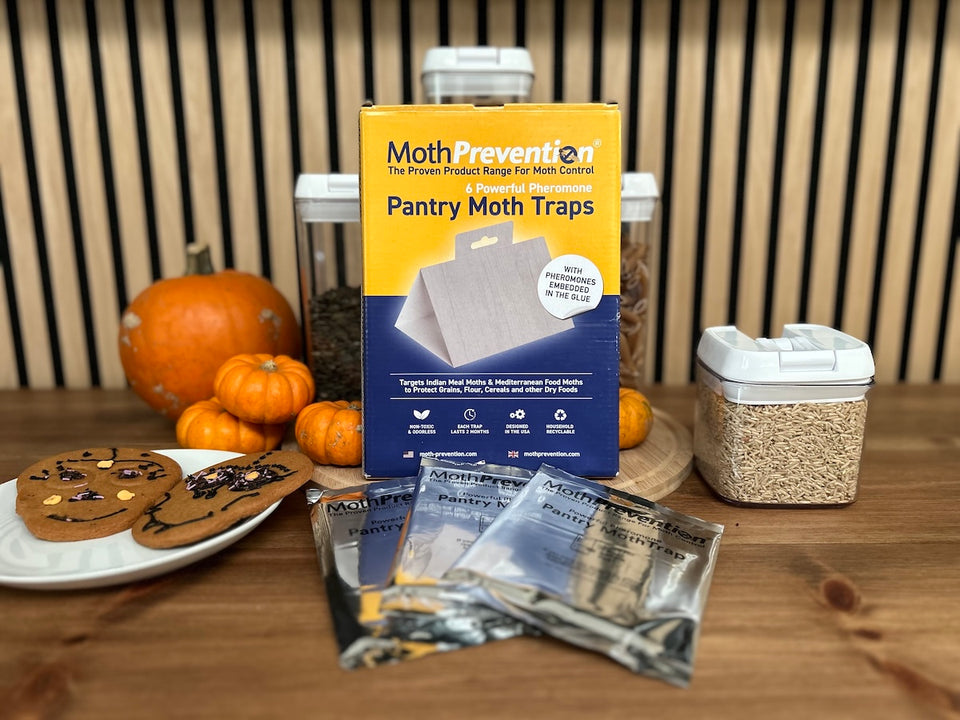
5. Install Non-Toxic Pantry Moth Traps
After cleaning and securing food items, set up targeted pheromone traps inside your cupboards.
Pantry Moth Traps utilise synthesised female pheromones infused into a sticky glue board. Male moths follow the scent trail and become trapped on the surface. This provides two major advantages:
- It breaks the reproductive cycle by reducing the number of fertile male moths available to mate with females.
- It acts as an accurate monitor, alerting you to any ongoing pest presence before a widespread infestation develops.
Position traps at eye level on open shelving or inside cupboards, ensuring they are placed away from draughty exterior doors or direct ventilation.

Frequently Asked Questions
Can freezing temperatures eliminate pantry moths?
Yes, sustained freezing temperatures will destroy all life stages of the Indian Meal Moth, including dormant eggs. If you regularly buy whole grains, pulses, or birdseed and wish to guarantee they are clear before larder storage, keep the sealed goods in a domestic freezer at -18°C\-0.4°F for at least 72 hours. This neutralises any microscopic eggs that may have entered during warehouse storage or packing.
How did pantry moths enter my home if the kitchen is clean?
Pantry moth infestations are almost never caused by poor housekeeping. In the vast majority of UK households, they are introduced via bought goods. Dry staples, pet feed, birdseed, and packaged confectionery can already house invisible eggs from distribution warehouses, transport pallets, or supermarket shelves before you bring them through your front door.
Do pantry moths feed on clothing, carpets, or upholstery?
No, they do not. Indian Meal Moths feed strictly on plant-based materials, grains, seeds, dried fruits, and confectionery. Their larvae do not feed on keratin, meaning they cannot digest wool, feathers, fur, or cashmere. If you are noticing ragged holes in your knitwear or carpets, you are dealing with the larvae from the Common Clothes Moths (Tineola bisselliella) or Case-bearing Clothes Moths (Tinea pellionella), which require distinct clothes moth pheromones.
How often should pantry moth traps be replaced?
Most premium pheromone traps stay active and effective for up to 12 weeks. If a trap becomes heavily coated in dust or filled with captured moths before that timeframe, replace it straight away with a fresh trap to maintain consistent coverage.
A Pest-Free Autumn of Baking and Treats
Preparing hearty autumn recipes and answering the door to trick-or-treaters should be an enjoyable seasonal tradition. While pantry moths are unwelcome guests, they are straightforward to manage when tackled with thorough cleaning, secure airtight containers, and active pheromone monitoring.
By taking sensible preventative measures now, you can protect your cupboards, preserve your Halloween treats, and enjoy the autumn season with confidence.
About MothPrevention
MothPrevention® speak to customers every day about their clothes moth issues - clothes moths are a species that are ever increasing and that can cause significant damage to clothes, carpets and other home textiles.
To date, we’ve helped over 250,000 customers deal with their moth problems. We have developed professional grade solutions including proprietary pheromones and trap design engineered to the highest production standards.