Why the Autumn Wardrobe Swap Is Your Best Defence Against Clothes Moths

The autumn wardrobe swap is the single most effective seasonal defence against clothes moths (Tineola bisselliella and Tinea pellionella). As temperatures drop and indoor central heating turns on, clothes moth larvae often experience accelerated feeding conditions inside warm, dark closets. Transitioning garments between seasons forces a total audit of your closet, allowing you to clean away microscopic moth eggs, eliminate residues that attract pests, and isolate natural fibre garments like wool and cashmere in cotton storage before winter breeding cycles take hold.
The Seasonal Vulnerability: Why Autumn Matters
As summer transitions into fall, homeowners prepare their homes for cooler weather by turning on central heating and retrieving winter knitwear. However, this transition period also creates an ideal environment for clothes moth damage if preventative steps are not taken.
During late spring and summer, adult clothes moths are active outdoors and indoors. Female moths lay between 40 and 50 eggs on suitable animal-derived fibres. In warm summer conditions, these eggs hatch in as few as 4 to 10 days. As autumn arrives, outdoor temperatures fall, which would naturally slow down insect development in unheated environments.
Modern central heating disrupts this natural seasonal slowdown. By maintaining indoor home temperatures between 68° F and 72° F (20°C to 22°C), households inadvertently create a climate-controlled sanctuary. Clothes moth larvae, which is the only life stage that eats fabric, remain active throughout the winter months.
Without an autumn closet audit, larvae hatched in late summer continue feeding undetected on stored garments all winter long.
The Mathematics of Autumn Moth Growth

To understand why intervention during the autumn wardrobe swap is critical, consider the rapid population growth rates of webbing clothes moths (Tineola bisselliella).
A Simple Timeline of Population Expansion
- Late Summer Arrival: A single female moth enters your closet and lays roughly 45 eggs.
- First Generation Larvae: With a typical 90% survival rate, around 40 larvae hatch and begin feeding on your garments.
- Mid-Autumn Maturity: Assuming an even split of males and females, 20 adult female moths mature inside the cozy warmth of your heated home.
- Second Generation Explosion: Each of those 20 new female moths lays another 45 eggs, producing up to 900 new eggs.
- Winter Damage Peak: With 90% of those eggs hatching, over 800 active, hungry larvae are now eating through your wardrobe.
Starting from just one adult female moth in late summer, an unmonitored wardrobe can harbor over 800 destructive larvae by mid-winter. Conducting a thorough autumn wardrobe swap breaks this exponential cycle before the second generation can establish itself.
Why Clothes Moths Target Autumn and Winter Clothing
Clothes moth larvae do not feed on synthetic fibres for nourishment; they strictly target natural fibres derived from animals. These materials contain keratin, a structural protein that larvae require to complete their development.
High-Risk Natural Fibres Include:
- Cashmere and Wool: Sweaters, suits, coats, and scarves.
- Silk: Blouses, dresses, and linings.
- Alpaca, Angora, and Mohair: Knitwear and blankets.
- Feathers and Down: Jackets, vests, and bedding.
- Fur and Leather: Coats and trims.

The Role of Organic Matter
Larvae are particularly attracted to garments that contain microscopic trace residues left behind during summer wear. Human perspiration, skin cells, food particles, and body oils supply essential nutritional salts and B vitamins that larvae need. Storing unwashed summer garments or packing away winter woollens without proper cleaning creates a primary feeding site for emerging larvae.
The 5-Step Autumn Wardrobe Swap Defense Protocol
Executing a methodical wardrobe swap in autumn guarantees that your closet is sanitised, your clothes are protected, and any existing pest activity is halted.
Step 1: Complete Closet Evacuation and Deep Clean
Do not simply shift hangers from left to right. Remove every item from the closet, including shoes, boxes and storage bags..
Vacuum all interior surfaces thoroughly. Pay special attention to:
- Floor corners and baseboards where dust, pet hair, and lint gather.
- Shelving joints, cracks, and sweater cubbies.
- Door tracks and upper shelf ledges.
After vacuuming, wipe down hard surfaces with a damp cloth and mild soap or a natural surface cleaner to remove residual dust and microscopic eggs.
Step 2: Visual Garment Inspection
Examine every individual garment under bright light before deciding whether to pack it away or keep it close by for the season. Look closely for:
- Irregular Holes: Small, ragged holes or patches of thinned fabric in woollens or silk.
- Silken Webbing: Fine threads or web-like structures spread across fabric surfaces.
- Pupal Cases: Small, cylindrical tubes resembling grains of rice, often covered in fabric debris.
- Larvae: Cream-coloured caterpillars (up to half an inch long) with dark brown or black heads.
Step 3: Temperature-Based Treatments

If you suspect exposure or want to ensure garments are 100% free of viable eggs and larvae, use verified temperature control methods:
- High-Heat Laundering: Wash heat-tolerant natural garments in hot water (120°F / 49°C or higher) for 20 to 30 minutes.
- Freezing Treatment: Place delicate woollens, cashmere, or silk inside sealed plastic bags. Freeze them at temperatures between 0°F and 18°F (-18°C to -8°C) for a minimum of 72 consecutive hours. This kills all life stages, including cold-resistant eggs.
- Professional Dry Cleaning: Dry cleaning uses chemical solvents and heat that effectively kill eggs, larvae, and adult moths while safely cleaning delicate fabrics.
Step 4: Choose Breathable Cotton Over Plastic Storage
When preparing seasonal clothing for storage, the material of your storage container is just as important as the seal itself. While it is tempting to reach for airtight plastic bins or plastic vacuum bags, natural fibres such as wool, cashmere, and silk need to breathe.
Animal-based fibres naturally contain moisture. Sealing them in airtight plastic bins or non-breathable vinyl creates an enclosed microclimate. Changes in household temperature cause condensation inside plastic containers, leading to mildew, stale odours, and fibre degradation. Additionally, plastic vacuum bags compress and crush the natural structure of wool fibres, reducing their softness and warmth over time.
For maximum protection against Clothes Moth Larvae and environmental damage, use high-density, breathable cotton storage solutions:
- Zippered Cotton Garment Bags: Use tightly woven cotton garment bags with secure zipper closures for hanging items such as wool coats, blazers, and silk garments. Pure organic cotton is not attractive to adult moths and larvae while allowing air circulation, preventing trapped humidity and musty smells.
- Zippered Cotton Storage Boxes: For folded knitwear, cashmere sweaters, and wool blankets, choose breathable cotton storage boxes with zipper seals. These keep out pests, maintain the shape of your garments, and preserve fibre integrity without crushing the knit.
- Avoid Cardboard and Loose Linens: Avoid cardboard boxes entirely, as cardboard absorbs moisture, creates acidity, and attracts household pests. Similarly, avoid loose, unsealed linen or cotton sacks that lack a complete zipper seal, as hungry larvae can easily crawl through small gaps.
By pairing clean garments with sealed, breathable cotton storage, you ensure your clothing remains completely protected from Clothes Moths without sacrificing the longevity of the natural fibres.
Step 5: Active Monitoring with Pheromone Traps

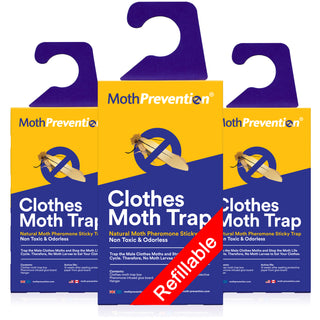
After cleaning and organising your space, set up natural clothes moth traps.
Pheromone traps utilise the specific female sex pheromone of the webbing clothes moth (Tineola bisselliella) to lure adult males onto a sticky board.
- Mating Interruption: Catching male moths prevents them from mating, stopping the reproductive cycle.
- Early Warning System: Checking traps weekly reveals whether an active infestation exists before garment damage occurs.
- Maintenance: Replace trap refill strips every 12 weeks to maintain maximum pheromone potency throughout autumn and winter.

Frequently Asked Questions (FAQ)
Do clothes moths go dormant during the winter?
In unheated outdoor environments, clothes moth development slows down significantly in winter. However, inside centrally heated homes, clothes moths do not go dormant. Maintained temperatures between 65°F and 75°F allow larvae to feed and develop continuously throughout the winter months.
What exact temperature kills clothes moth eggs and larvae?
Sustained heat of 120°F (49°C) or higher for at least 30 minutes kills all life stages of clothes moths. Alternatively, sustained cold temperatures of 18°F (-8°C) or below for a minimum of 72 hours will also eliminate eggs, larvae, and adult moths.
Why do clothes moths prefer cashmere and wool over cotton?
Cashmere, wool, silk, and feathers consist of animal proteins containing keratin. Clothes moth larvae possess specialised digestive enzymes capable of breaking down keratin into essential nutrients. Plant-based fibres like cotton and linen do not contain keratin, so larvae cannot derive nutritional value from them unless they are blended with wool or stained with food and sweat.
Can clothes moth larvae damage synthetic fabrics?
Larvae cannot digest pure synthetic fibres such as polyester, nylon, or acrylic. However, if synthetic fabrics are blended with natural fibres like wool, or if they contain residual sweat, or food stains, larvae may bite through the synthetic material, causing fabric damage.
How often should pheromone moth traps be replaced in autumn?
Pheromone strips gradually lose efficacy as the attractant evaporates over time. For continuous protection, replace pheromone trap strips every 12 weeks. Replacing your trap refills during your autumn wardrobe swap ensures full coverage through the winter season.
Take Control of Your Closet This Autumn
The autumn wardrobe swap is more than an organisational chore; it is your most strategic defensive window against clothes moth infestations. By removing every garment, cleaning closet interiors, treating suspect items with heat or freezing, and storing natural fibres in protective containers, you eliminate the conditions clothes moths need to thrive.
Pairing these physical preventative steps with continuous pheromone trap monitoring ensures your favourite cashmere sweaters, wool coats, and silk garments remain fully protected all winter long.
About MothPrevention
MothPrevention® speak to customers every day about their clothes moth issues - clothes moths are a species that are ever increasing and that can cause significant damage to clothes, carpets and other home textiles.
To date, we’ve helped over 250,000 customers deal with their moth problems. We have developed professional grade solutions including proprietary pheromones and trap design engineered to the highest production standards.