Clothes Moths in Heated Storage Areas: A Winter Guide

As temperatures fall across the United Kingdom and the festive season approaches, households prepare for the arrival of overnight guests. Spare rooms are readied, heavy winter coats and cashmere knitwear are brought out of seasonal storage, and cupboards are opened to retrieve spare duvets, woollen blankets, and fresh bed linen.
Discovering ragged holes in a favourite lambswool jumper or finding fine silk webbing across spare blankets can quickly derail your preparations. Clothes moths are a widespread domestic issue throughout the UK, affecting historic country houses and modern flats alike. An infestation does not indicate poor hygiene; these pests are brought indoors on second-hand furniture, vintage garments, or even on footwear and outerwear.
While traditional airing cupboards are well-known problem areas, any warm domestic storage zone can become an unexpected breeding ground. Wardrobes backed onto hot central heating pipework, storage chests positioned next to active radiators, and under-bed containers sitting over underfloor heating runs all create the exact microclimates clothes moths seek. Understanding why clothes moths target these warm spaces is the first step towards protecting your natural fibres and ensuring your guest bedding remains immaculate throughout the winter.
Why Heated Domestic Storage Spaces Become Clothes Moth Havens
In UK homes, artificial heating creates localised microclimates that remain warm and sheltered throughout the autumn and winter. While homeowners deliberately select these dry spots to prevent dampness and mildew on bedding and towels, the consistent warmth inadvertently creates ideal conditions for fabric pests.
Common domestic heat zones that attract clothes moths include:
- Traditional Airing Cupboards: Enclosed cupboards built around a hot water cylinder, system boiler, or central heating pipework.
- Wardrobes Backed onto Hot Walls: Fitted or freestanding wardrobes placed against internal walls carrying uninsulated hot water pipes, central heating risers, or active chimney breasts.
- Storage Drawers and Chests Beside Radiators: Low storage units, blanket chests, or bedside drawers positioned directly adjacent to or under central heating radiators.
- Under-Bed Storage over Underfloor Heating: Plastic or fabric storage boxes resting on floors where heating manifolds and warm water pipes run beneath the floorboards.

Two primary species of moth larvae that cause fabric damage across UK households are:
- The Common Webbing Clothes Moth (Tineola bisselliella): A small, golden-buff moth measuring roughly 6 mm to 8 mm in length.
- The Case-Bearing Clothes Moth (Tinea pellionella): Slightly darker brown with faint dark spots, whose larvae build portable silken cases that resemble small grains of rice.
The Role of Temperature in Year-Round Breeding
In natural, unheated outdoor environments, clothes moths go dormant during the colder British months. However, domestic heating in homes overrides this natural cycle.
Airing cupboards, radiator-warmed storage spaces, and wardrobes backed onto heating pipes frequently sustain steady ambient temperatures between 21°C and 25°C. At these temperatures, the developmental cycle of Tineola bisselliella accelerates significantly. Research documented by English Heritage demonstrates that heated indoor environments allow clothes moths to produce multiple generations annually without entering winter dormancy.
The Attraction to Keratin
Adult clothes moths do not possess functional mouthparts; they do not feed on fabrics, nor do they cause structural damage. The destruction is caused entirely by clothes moth larvae.
Clothes moth larvae require keratin to survive and grow. Keratin is an insoluble fibrous protein found in animal-derived fibres, including:
- Sheep's wool and lambswool
- Cashmere and pashmina
- Alpaca, mohair, and angora
- Silk
- Feathers, down, and natural horsehair
While pure cotton and linen are plant-based fibres composed of cellulose (which larvae cannot digest), spare sheets, mattress toppers, and cotton towels stored in warm cupboards are still vulnerable. If cotton linens contain traces of human sweat, skin flakes, or food residues, larvae will feed on those organic contaminants, chewing through the surrounding fabric in the process. Furthermore, spare bedding sets frequently contain woollen blankets or feather-filled duvets, placing natural protein sources directly alongside your cotton sheets.

Warning Signs in Stored Bedding, Linens, and Knitwear
Clothes moth larvae are photophobic: they actively avoid bright light and thrive in dark, quiet, undisturbed corners. Because spare guest bedding and winter wardrobes are often left undisturbed for weeks or months at a time, an infestation can multiply unnoticed until you unpack items for seasonal guests.
Inspect your stored textiles for these distinct indicators:
- Irregular Holes and Surface Thinning: Unlike carpet beetles, which tend to chew large, clean sections, clothes moth larvae graze unevenly. Look for small, scattered holes or areas where the pile of a woollen blanket or knitwear appears shaved or threadbare.
- Silken Webbing and Tubes: Common clothes moth larvae spin silken feeding tunnels or scattered white webbing across the surface of fabrics.
- Rice-Like Cases: Case-bearing clothes moth larvae construct small, cylindrical cases out of silk and fabric fibres, which they drag behind them as they feed.
- Frass: Larval excrement consists of microscopic, sand-like pellets that often take on the colour of the fabric the larvae have consumed.
- Adult Moths: Small, skittering moths that run across shelves or flutter weakly when a cupboard door or wardrobe is opened. Because they avoid light, clothes moths rarely fly towards lamps or television screens like outdoor garden moths do.
Step-by-Step Guide: Preparing Heated Storage Spaces and Linens
Eliminating clothes moths requires a methodical process that addresses all life stages: eggs, larvae, pupae, and adult moths. Follow this comprehensive five-step protocol before your guests arrive.
Step 1: Complete Emptying and Inspection
Empty the storage area entirely, whether it is an airing cupboard, a wardrobe, under-bed storage boxes, or drawers next to a radiator. Move every item into a well-lit room with hard flooring to avoid scattering eggs into nearby carpets.
Examine every blanket, duvet, pillow, and piece of knitwear individually. Pay close attention to seams, folded edges, pockets, and collars, where larvae prefer to conceal themselves.
Step 2: Temperature Treatments
Clothes moth eggs and larvae are vulnerable to extreme temperatures. Treat all exposed or vulnerable textiles using one of the following verified methods:

- Washing at High Heat: If fabric care labels permit, wash items at 60°C for a minimum of 30 minutes. This temperature reliably destroys all moth life cycle stages.
- Freezing Delicates: For high-value woollens, cashmere jumpers, or feather duvets that cannot withstand a hot wash without shrinking, use freezing. Place the items into airtight polythene bags, press out excess air, and seal tightly. Freeze at -18°C for a minimum of 72 hours. A full week in a domestic chest freezer ensures complete thermal penetration.
- Professional Dry Cleaning: Dry cleaning fluids and commercial steam pressing effectively eradicate larvae and eggs while preserving delicate tailoring and luxury fibres.
Step 3: Sanitising Warm Storage Cavities
Once the space is empty, clean the physical structure thoroughly:
- Vacuum every shelf, drawer base, internal wardrobe corner, and floor area.
- Use the crevice attachment to clean behind radiators, pipework, shelf brackets, and skirting boards, where lint and pet hair accumulate.
- Immediately empty the vacuum cleaner contents into an outdoor bin to prevent larvae from re-emerging indoors.
- Wash down all hard surfaces using warm, soapy water or a sanitising cleaning spray to remove remaining organic residues.
Step 4: Secure Storage Solutions
Do not return clean items loosely to bare wooden shelves or unsealed drawers. Natural timber contains grain crevices where microscopic moth eggs can remain sheltered, and warm air circulating near pipes or radiators will draw moths back to the area.
- Breathable Garment Bags: Store heavy woollen overcoats and suits in breathable, zipped garment covers. Avoid unsealed plastic dry-cleaning bags, which trap moisture and can cause mildew.
- Sealed Storage Boxes: Store spare guest bedding, woollen throws, and seasonal knitwear inside rigid, clean storage containers with secure snap-lock lids. Alternatively, high-grade zippered fabric storage bags create an effective physical barrier against returning adult moths.
Step 5: Ongoing Monitoring with Pheromone Traps
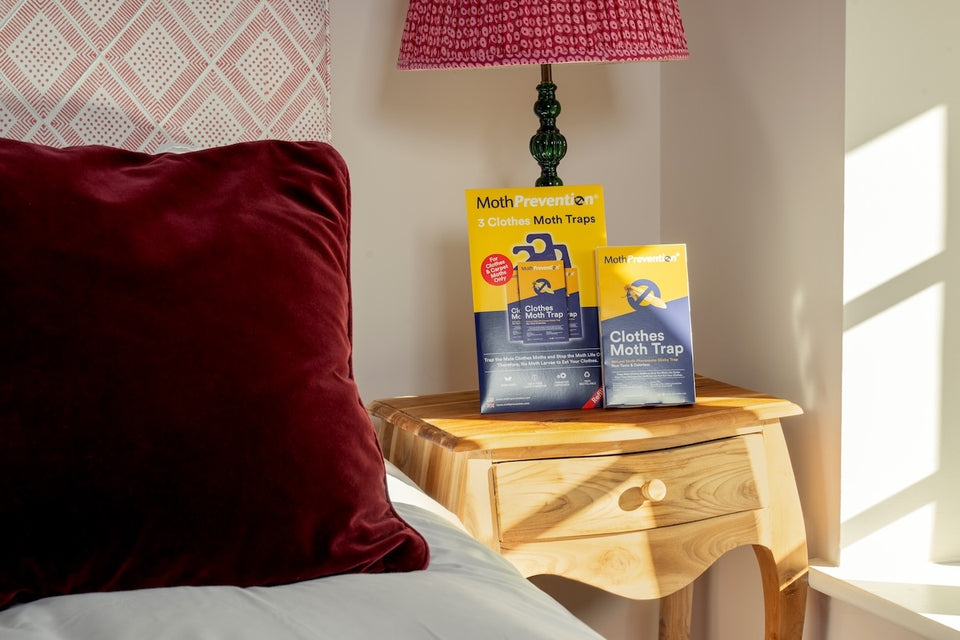
After cleaning and repacking, place a non-toxic pheromone clothes moth trap on a shelf inside or immediately adjacent to the storage area.
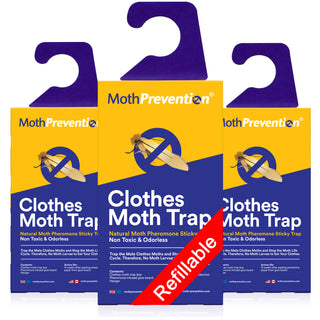
MothPrevention Clothes Moth Traps utilise targeted female sex pheromones embedded in an adhesive board. These pheromones attract adult male moths, trapping them on the sticky surface. This intervention delivers two key benefits:
- Breeding Interruption: Removing male moths reduces mating opportunities for females, helping to suppress population growth.
- Early Detection: The trap acts as an early warning system. Inspecting the adhesive board weekly allows you to detect renewed moth activity long before physical damage appears on your textiles.
To preserve potency, replace the pheromone refill strips every 12 weeks.

Practical Storage Maintenance Checklist
| Task | Action Required | Recommended Frequency |
|---|---|---|
| Pheromone Traps | Check sticky boards for male moth catches | Weekly |
| Trap Refills | Replace pheromone strips to maintain attraction potency | Every 12 weeks |
| Linens & Woollens | Wash or dry clean items before long-term storage | Prior to storage |
| Deep Clean | Vacuum slatted shelves, wardrobe edges, and behind radiators | Bi-annually |
| Guest Bedding Check | Inspect spare blankets and duvets before dressing beds | Seasonal (Pre-Christmas) |
Frequently Asked Questions
Why do I find holes in cotton sheets and towels if clothes moths only digest animal fibres?
Clothes moth larvae cannot extract nutritional value from pure cellulose fibres like cotton, flax linen, or plant-based synthetics. However, they frequently damage these fabrics for two reasons. First, if spare towels or sheets carry invisible residues of human perspiration, skin flakes, hair, or spilled liquids, the larvae chew through the cotton to consume those proteins. Second, case-bearing larvae cut fibres indiscriminately to construct their portable protective cases. If cotton items are stacked adjacent to a woollen blanket or feather duvet, larvae will readily crawl across and chew through both.
Why are wardrobes next to hot water pipes or chimney breasts at greater risk?
Many UK properties feature internal walls that house hidden central heating risers, hot water feeds, or active chimney flues. When fitted wardrobes or heavy wooden cupboards are placed against these walls, the rear panels absorb heat continuously. This creates a warm, dark, and undisturbed microclimate identical to an airing cupboard, allowing clothes moth larvae to feed and pupate rapidly right through the coldest winter months.
Can under-bed storage boxes placed over underfloor heating attract clothes moths?
Yes. Underfloor heating runs warm water pipes or electric heating elements directly beneath floorboards or tiles. Storage boxes placed flat on these floors absorb rising heat. If these boxes contain woollen throws, spare duvets, or winter clothing, the elevated internal temperature accelerates moth breeding. Ensure under-bed items are stored in sealed containers.
Do natural deterrents like cedar wood blocks and lavender bags kill clothes moth larvae?
No. Cedar wood rings, shavings, and dried lavender sachets act as deterrents to adult female moths seeking egg-laying sites. However, these natural scents do not kill active larvae or destroy eggs. Furthermore, natural cedar wood oils evaporate within a few weeks of exposure to dry domestic air, rendering them ineffective unless regularly sanded and refreshed with concentrated essential oils. Relying solely on cedar or lavender to resolve an established infestation will allow larvae to continue feeding undisturbed.
Will pheromone moth traps attract more moths into my house from outside?
No. The female sex pheromones used in professional clothes moth sticky traps are formulated specifically for domestic indoor clothes moth species (Tineola bisselliella and Tinea pellionella). These pheromones disperse over a controlled radius within the room or enclosed cupboard. Outdoor garden moths navigate by different environmental cues and are completely unaffected by clothes moth pheromones. Furthermore, adult clothes moths are poor, weak fliers that avoid exterior currents, preferring quiet, dark residential interiors.
Can I kill clothes moth eggs with a clothes steamer or iron instead of washing at 60°C?

Yes, high-temperature steam is an effective contact treatment for delicate woollens, luxury throws, and bulky winter coats that cannot tolerate a hot washing machine cycle. Direct contact with temperatures above 55°C denatures larval and egg proteins instantly. When steaming, move slowly along seams, under collars, and across deep folds, ensuring the steam fully penetrates the weave of the fabric. Allow garments to dry completely in an open, bright space before transferring them to sealed storage.
How do I treat dark voids behind radiators and hot water pipes where a vacuum cannot reach?
Radiator backings, boiler pipework, and gaps behind fitted wardrobes accumulate hair and dust fibres that provide sustained sustenance for larvae. When a vacuum attachment cannot reach these recesses, escalate to an indoor-approved insecticidal fumer.
How long can clothes moth larvae survive without food inside heated storage areas?
Clothes moth larvae are resilient and can survive for several weeks or even months without a fresh textile food source. In the absence of cashmere or wool, larvae survive on shed pet hair, carpet fluff, dead insects, and organic dust trapped in structural floor gaps. In warm environments, their feeding and development rate stays high, which means starvation is rarely an effective natural control method. That is why it is essential to check these vulnerable areas regularly and treat accordingly.
Taking these preventative measures ensures your storage spaces function as intended: practical, clean areas that keep your home organised and your festive guests comfortable, completely free from moth damage.
About MothPrevention
MothPrevention® speak to customers every day about their clothes moth issues - clothes moths are a species that are ever increasing and that can cause significant damage to clothes, carpets and other home textiles.
To date, we’ve helped over 250,000 customers deal with their moth problems. We have developed professional grade solutions including proprietary pheromones and trap design engineered to the highest production standards.


